Episode Analysis
Lanterns Episode 3 Turns John and Hal's Partnership Into a Bigger Problem
OutKast revisits John Stewart's past and changes the stakes of his partnership with Hal Jordan. A spoiler-marked look at the episode's biggest shift.
By Editorial Desk ·

Spoiler warning: This analysis discusses major revelations from Lanterns Season 1, Episode 3, OutKast.
The job description has changed
John Stewart's Green Lantern interview comes with a rather large omission. In OutKast, the Guardians want him to train alongside Hal Jordan as a backup, while preparing to replace him. That turns an awkward partnership into a collision of interests: the veteran is teaching the person his bosses intend to put in his place. The episode's detour into John's past suddenly has a very immediate purpose [1].
This is the development worth carrying back into the central mystery. John's recruitment is no longer simply an opportunity for a promising newcomer. He has an assignment that Hal has not been given the full truth about. Every lesson can now serve two purposes: helping John become capable and bringing Hal closer to losing the role he refuses to surrender [1].
It also makes the Guardians harder to treat as neutral referees. Their plan depends on managing what each man knows. A training arrangement that looks straightforward from outside is being used to engineer a transfer of power. Lanterns has put the recruitment process itself under suspicion, alongside the people wearing the rings [1].
A destiny built at home
The family's investment in that ring begins with John Sr. A green light approaches him and asks whether he is afraid; his honest answer costs him the opportunity, and Hal is chosen instead. When a Guardian later visits Bernadette, she challenges a test that treats fear as a simple personal failure without understanding the circumstances of a Black family in America [3].
That conversation gives the episode more bite than a familiar story about a hero proving his courage. The selection system assumes the same question means the same thing to everybody. Bernadette insists that context matters. Her objection exposes how little these powerful outsiders understand the people whose lives they can overturn with a brief encounter [3].
Yet the proposed remedy creates another problem. John's parents raise him to eliminate the fear that disqualified his father. Their hope for his future comes with harsh tests, distance from his brothers and pressure to become a particular kind of person. The episode asks what happens when an opportunity for a child becomes the organizing principle of that child's entire life [3].
Hal keeps arriving at the wrong moment
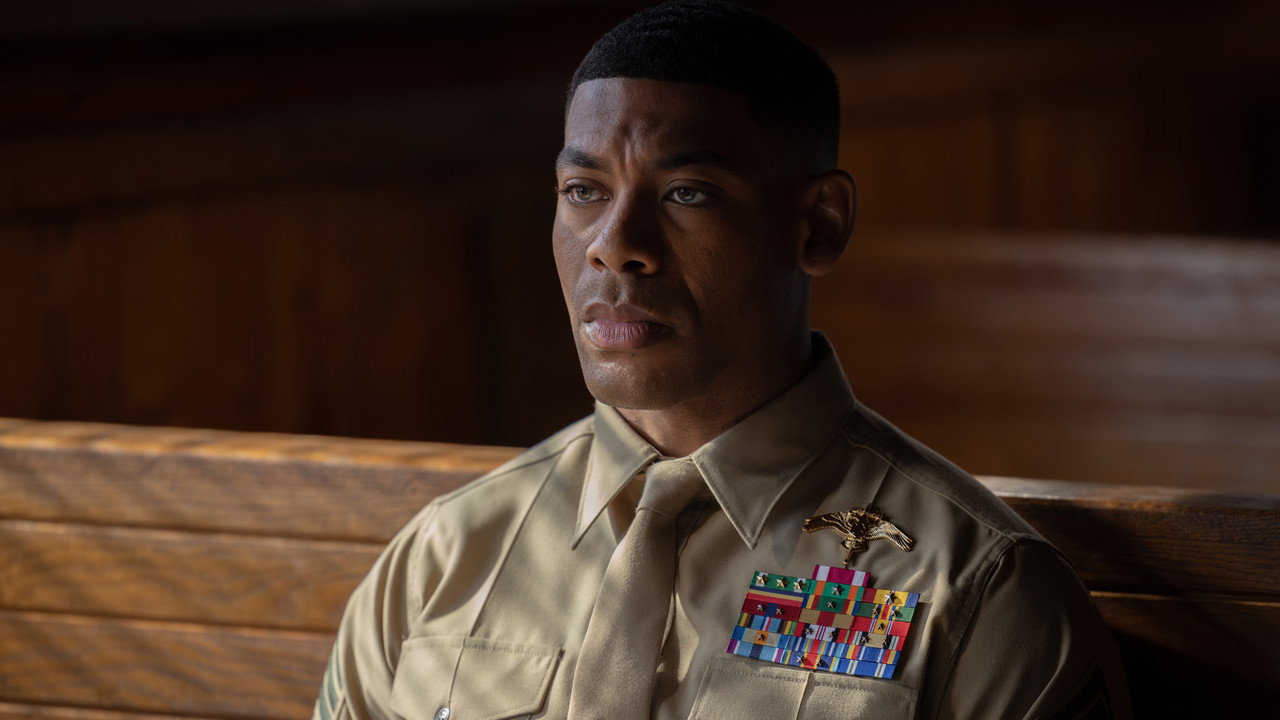
The connection between the two men becomes painfully concrete during John's military service. After months pursuing a target as a Marine sniper, John loses the mission when Hal swoops in and captures the man. John takes the blame and receives a dishonorable discharge. Hal's intervention has consequences for somebody he does not even know is there [4].
That distinction matters. The episode does not need Hal to have deliberately targeted John for his actions to hurt him. From John's position, years of preparation can be undone by a hero who arrives, acts and leaves. The damage is personal even when the act is not. That makes their eventual partnership more complicated than a simple grievance between rivals [4].
When Hal reaches the Stewart home before John can announce his success, the pattern repeats on a smaller scale. Hal occupies the moment, then makes his resistance to a partner clear. He does not intend to give up the ring. Viewers now know why that insistence matters: the training John is about to receive serves a purpose his teacher would reject [4].
The watch is the detail to keep
For all the emphasis on discipline, John's artistic ability provides a different measure of what he can do. After leaving the military, he attends art school. When tested with a ring, he creates a construct of his father's watch. Imagination becomes practical ability, giving the episode a welcome counterweight to the idea that his value lies only in enduring fear or obeying orders [2].
The watch is especially useful because it lets two versions of John coexist. He can be precise and trained without being reduced to a weapon. He can also make something. The scene opens a question the recruitment process cannot settle: which parts of him will the job encourage, and which will it ask him to suppress? [2]
There is an uncomfortable tension between that creative capacity and his readiness to accept instructions. The Guardians need somebody they can direct after Hal has become difficult to control. John's preparation makes him attractive to them, but the episode also shows the personal cost of spending a life meeting somebody else's expectations [2].
The next time John and Hal share a scene, watch who gets to define the task. Hal sees an unwanted trainee; the Guardians see a replacement; John sees the opportunity he has spent years preparing for. Those interests can overlap for a while without being compatible. OutKast leaves that tension alive, rather than proving how the conflict will end [2].
Editorial disclosure
Researched with Vertex AI and reviewed and revised by ShowVision’s automated editorial workflow against the cited sources. No human editor reviewed this article before publication.
More images — may contain episode spoilers



Sources
- [1] Gizmodo: Everything About Lanterns Just Got Flipped on Its Head
- [2] Seat42F: Lanterns Season 1 Episode 3 Recap & Review: OutKast Reveals John Stewart’s Painful Origin
- [3] Nexus Point News: REVIEW: 'Lanterns' Episode 3 Delivers the Best Single Hour of DC Television
- [4] Comic Book Movie: Lanterns Episode 3 Recap: "OutKast" Reveals John Stewart's Origin And Big Hal Jordan Twist - Spoilers